


.svg)
What the 2025 Nobel Prize in Economics Teaches Us About Innovation, Part 2: Creative Destruction
This year the Nobel Prize in Economic Sciences went to Joel Mokyr, Philippe Aghion, and Peter Howitt, for their explanation of “how innovation provides the impetus for further progress.”
In our last blog, we did a deep dive on Joel Mokyr’s work identifying the three prerequisites for sustained growth. This time, we’ll look at Philippe Aghion and Peter Howitt’s work on how innovation drives economic growth, with a focus on creative destruction. By understanding the both creative and destructive power of innovation, we can make wiser decisions as innovators about what innovations to pursue and how much to invest in them.
What Is Creative Destruction?
For roughly 200 years, we have lived in a period of sustained economic growth. On the surface, this gives the appearance of great stability, but peek below, and you’ll find volatility and churn. On the macro level, the economy may continually grow, but on the micro level, there are clear winners and losers. Every year, more than 10% of companies exit the market, while a new 10% enter the market. Likewise, among incumbent firms, jobs are continually reallocated, with the annual job creation and job destruction rates being above 10% as well.
The vast majority of this “churn” happens within specific industries, as opposed to representing a shift between sectors. Additionally, there is a correlation between entry and exit rates as well as between job creation and destruction rates. Industries with a high exit rate also tend to have a high entry rate, and industries with a lot of job creation typically also have a lot of job destruction.
The question is: Why?
It’s due to creative destruction, a term coined by Joseph Schumpeter in 1942. Creative destruction is a natural consequence of innovation, in which the new replaces the old. Telephones and fax machines replaced telegraph services. Streaming services made physical video rental chains obsolete. And a number of data storage options have come and gone, from floppy disks to CDs to USBs to cloud storage. As solutions shift, new companies and jobs are created, while existing companies and jobs are destroyed.
Aghion and Howitt identified this process of creative destruction as not simply a byproduct of innovation, but a key driver of sustained growth. When a company innovates, creating a new product or a better way of doing something, they can outcompete others in the marketplace. Assuming the first company has patented their innovation, others cannot simply copy the product or process. If they want to compete, they must produce their own innovation, leading to the upward spiral of continual innovation that drives sustained growth.
A Mathematical Model of Creative Destruction
Aghion and Howitt constructed the first macroeconomic model for creative destruction to have general equilibrium (meaning that it reflects the whole economy, taking into account a number of interconnected factors, like interest rates, household savings, and more). We’ll spare you the mathematical details, and instead, we’ll look at how the model has been used to analyze two key areas related to innovation: competition and R&D investment/subsidies.
Competition
The model shows that with too much competition, companies actually have low incentive to invest in R&D and innovation because the pace of creative destruction is too high, making it difficult to earn back the money invested in R&D before a new innovation makes the first obsolete.
On the other end of the spectrum, too little competition likewise deters innovation. Uncontested monopolies have far less reason to innovate than newcomers, as doing so would cannibalize their own profits. Instead, they typically try to block entry by new companies and hinder R&D efforts in order to retain their monopoly.
In practice, we tend to suffer more from too little competition than too much, so policies should seek to prevent monopolies and encourage healthy competition. Similarly, patent protection should be designed in such a way to stimulate innovation, not discourage it by inhibiting the flow of ideas.
The takeaway for innovators: Think about the competition you are up against, and understand that while patents may be able to protect your invention, they won’t protect you from new innovations that come onto the market.
R&D Investment and Subsidies
One of the things the model can do is analyze whether there’s an optimal volume of R&D. It’s tricky to calculate, because there are two opposing mechanisms: societal incentives vs. economic ones.
For society, innovation is almost always a good thing. One innovation builds upon another, and so the old innovations remain valuable. For example, while cellphones have replaced many landlines, the invention of the telephone remains valuable, as it was a necessary stepping-stone to cellphones. In this view, innovation has a greater value for society than for the companies innovating, as they may not always make substantial profit from their innovations before new solutions take over. This suggests that society should subsidize R&D.
An opposing argument is that even a minor innovation can help a company outcompete others, securing profits much larger than the societal gains. From this perspective, investments in R&D can be too large and technological development can be too rapid.
Ultimately, the model concludes that a one-size-fits-all approach to R&D subsidies is not ideal. One thing Aghion does suggest in later research, though, is for universities to develop ties with private enterprise, in order to turn innovative ideas into adopted technologies.
The takeaway for innovators: Every innovation has a limited lifespan before something new replaces it. So think about not only whether your solution will succeed in the marketplace, but for how long before being dethroned. Pursue innovations that have a higher likelihood of returning your investment.
Innovation Is Not a Rising Tide, but a Wildfire
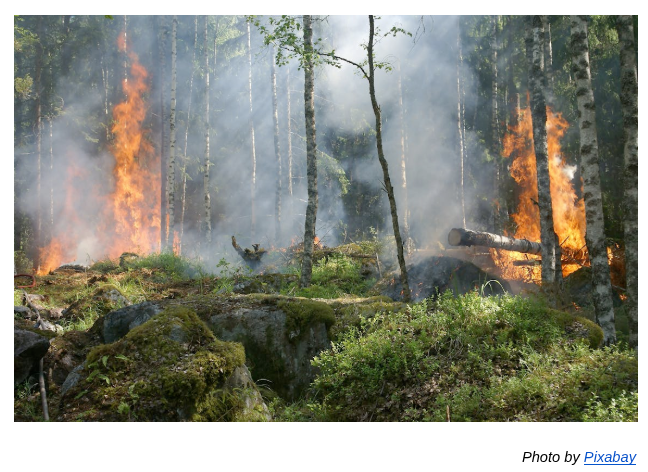
It’s said that a rising tide lifts all boats. While innovation may be a rising tide for society as a whole, on the micro level, it’s more like a wildfire. It changes the landscape, burning the old and allowing the new to take root.
When the wildfire comes, the survivors are those that succeed in creating, adopting, and improving new technologies. Creative destruction is not merely a force to be endured, but the engine of progress that must be managed and embraced.
Related Posts
Innovation as Meditation: What a 150-Year-Old Workshop Can Teach Us About Breakthrough Thinking
We recently came across a piece in Big Think that stopped us in our tracks. Writer Eric Markowitz visited Kaikado, a tea caddy workshop in Kyoto that has been in operation since 1875...
