


.svg)
Secrets from the Arctic Deep: How a Whale Could Revolutionize Our Approach to Cancer
There’s a big mystery in biology called Peto’s paradox (named after statistician and epidemiologist Richard Peto, who first observed the oddity in 1977).
Cancer is a disease characterized by abnormal cell growth. So logic would suggest that large creatures and long-lived ones, those with the most cells and those with the most time for genetic mutations to occur, would be more likely to develop cancer.
But this isn’t the case. Just look at bowhead whales.
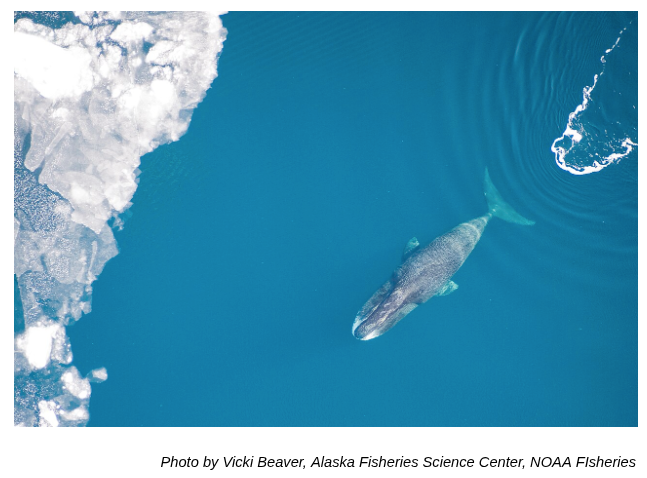
With documented lifespans of over 200 years, bowhead whales are the longest-living mammal on earth. They are also one of the largest, weighing in at 75 to 100 tons. (Bonus fun fact: They have the largest mouth of any animal, with their mouths comprising nearly one-third of their body length.)
And yet, despite all those cells and all that time for genetic mutations to occur, bowhead whales have a far greater resistance to cancer (and aging) compared to humans.
The big question is why?
New research published in the Nature journal may hold the answer, and the findings could influence how we treat—or, better yet, prevent—cancer in humans. It’s an important demonstration of the value of academic research and a reminder that innovation often comes from unexpected places.
Unpacking the Mystery: From Elephants to Oncogenic Hits
As is true in all innovation, the researchers had to iterate through several theories before unlocking the answer.
In previous research, scientists found that elephants have more copies of a tumor suppressor gene, which produces a protein called p53 that can stop abnormal cells from dividing, activate DNA repair, and trigger cell death. Essentially, it helps to prevent cancer before it can take hold. While humans have just one copy of the tumor suppressor gene, elephants have twenty. Since bowhead whales are even bigger than elephants, the researchers thought the whales might have even more copies of the gene.
When they looked at the data, though, they found that the whale cells displayed lower p53 activity compared to human cells.
Next, they hypothesized that bowhead whales’ cells were simply better equipped to handle mutations. They tested this by examining the number of oncogenic hits (genetic mutations known to contribute to the development of cancer) required to trigger malignant growth. (The generally accepted theory today is the multi-stage model of carcinogenesis, which states that cancer develops through a series of genetic mutations, rather than a single cause.)
To their surprise, fewer hits were required than for humans. So this second hypothesis was also disproven.
And then the breakthrough came.
The Breakthrough: DNA Repair Experts
The breakthrough began with a simple idea. If the whales did not have more tumor suppressor genes and they weren’t better at handling mutations, perhaps they simply did not acquire mutations in the first place.
Here, the data turned promising. They found that bowhead whale cells indeed displayed lower spontaneous and induced mutation rates, with especially high resistance to large structural variants, including deletions, insertions, duplications, and inversions.
Bowhead whales, it turns out, are experts in DNA repair, particularly for double-strand breaks. DNA is structured as a helix with two long strands of nucleotides wound around each other. In a double-strand break, as it sounds, both strands are broken, which is particularly bad. In most species, when their DNA repair mechanisms put the two ends back together, a good amount of DNA ends up deleted, leading to those mutations that can cause cancer. Bowhead whales, though, manage to meld the pieces back together with far greater repair fidelity. Humans are already better than most species at this type of repair, but bowhead whales are two to three times even better than humans.
Again, that ever-nagging question reared its head: Why?
The researchers dug even deeper and found that this ability is at least partly related to CIRBP (cold-inducible RNA-binding protein), which is much more abundant in bowhead whales than other species. When researchers put the whale version of CIRBP into human cells, those cells improved at DNA repair, and when researchers induced an overexpression of the protein in fruit flies, the insects lived longer and became more resistant to irradiation.
This suggests that the large amount of CIRBP could contribute not only to the bowhead whales’ resistance to cancer but also their longevity, and it opens up interesting new avenues for medical therapies.
From the Arctic to the Clinic: Translating Evolution to Innovation
For billions of years the earth has been running the largest, most thorough experiment known to humankind: evolution. We have much to learn from it, as the bowhead whale demonstrates.
If we can harness the superior DNA repair mechanism that evolution perfected in the Arctic deep—perhaps through CIRBP-boosting therapies or other novel treatments—we may move beyond merely treating cancer to actively preventing it.
So often, this is the way innovation goes. It crosses industries and species and is built on the back of research, which makes it so crucial for academic institutions and innovators to work together, to transform knowledge into impactful solutions that improve people’s lives.
At PCDworks, we believe deeply in the importance of collaboration in innovation, which is why we have helped to found the East Texas Technology and Innovation Coalition (ETTIC), which brings together the finest innovators from business, local government, and higher education. If you’d like to help advance innovation in East Texas, we invite you to join us. Contact us at hello@pcdworks.com or join the ETTIC mailing list at https://www.ettic.tech/.
Related Posts
Innovation as Meditation: What a 150-Year-Old Workshop Can Teach Us About Breakthrough Thinking
We recently came across a piece in Big Think that stopped us in our tracks. Writer Eric Markowitz visited Kaikado, a tea caddy workshop in Kyoto that has been in operation since 1875...
